
Notes3 min read
What makes Kashmiri chilli different
Less heat, more colour. Why the valley's chilli behaves the way it does.
From the unit at Ganderbal
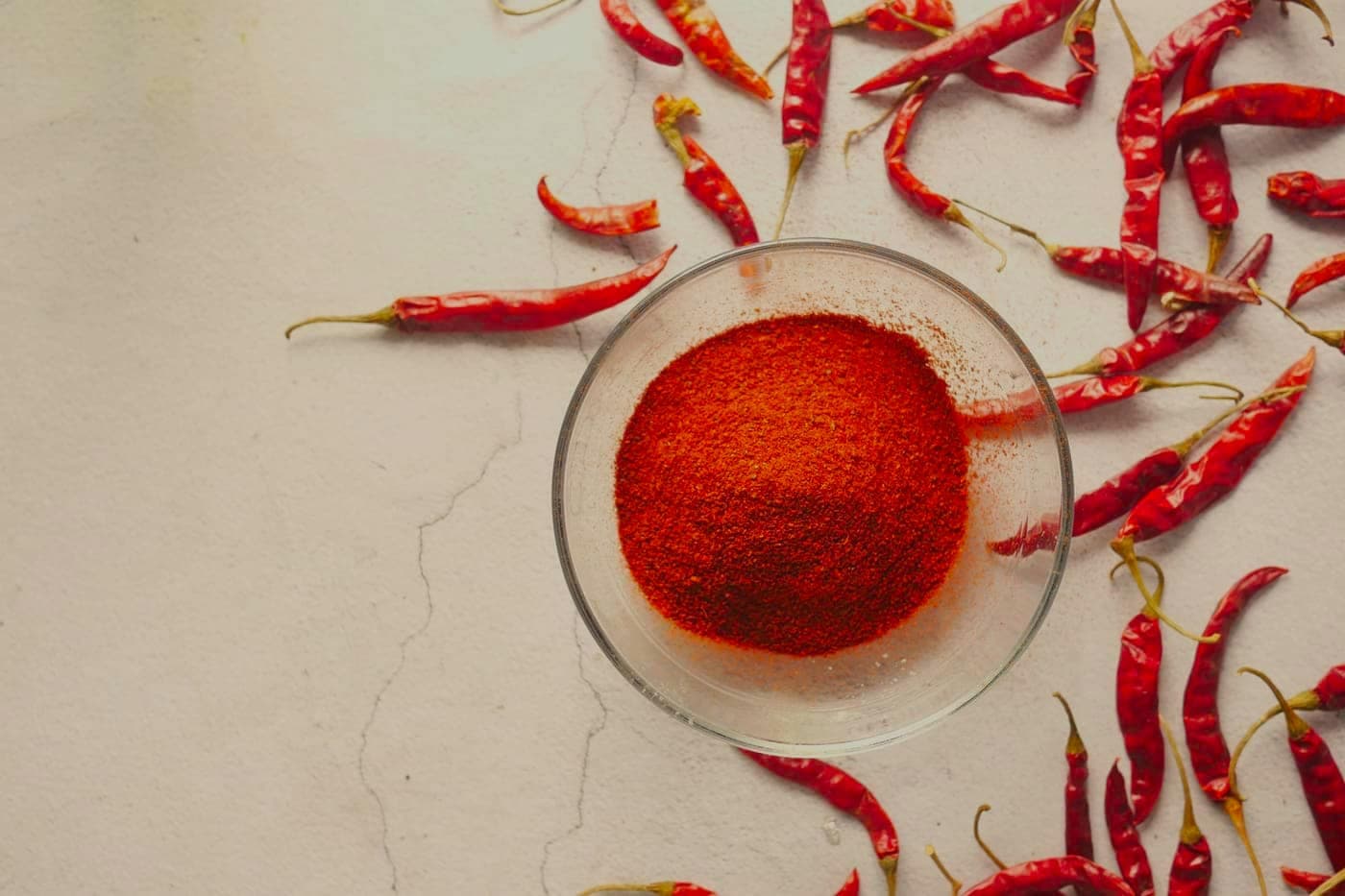
People who cook with Kashmiri chilli for the first time usually make the same mistake. They use the amount their recipe says, taste it, find it mild, and conclude they have been sold a weak chilli.
They have been sold a different chilli, which is doing a different job.
Heat and colour are two separate things
A chilli's heat comes from capsaicin. Its red comes from carotenoid pigments, mostly capsanthin. The two are made by the plant independently, and breeding for one does not get you the other.
Most chillies grown in India for powder are bred towards heat. Kashmiri chilli has been selected, over a very long time, in the other direction: enormous colour, very little heat.
The numbers make the point. A common Indian hot chilli sits somewhere around 30,000 to 50,000 on the Scoville scale. Kashmiri chilli is usually in the low thousands — often about 1,000 to 2,000. It is roughly twenty times milder.
Which is exactly why it is useful
Look at what rogan josh needs: a deep, even red through the whole gravy. To get that from a hot chilli you would need three or four tablespoons of something that is twenty times hotter, and nobody could eat the result.
With Kashmiri chilli you can use three tablespoons. The colour goes in and the heat does not follow. That is not a compromise — that is the entire reason this variety was kept and grown.
The same logic runs through a lot of Kashmiri cooking, and through tandoori marinades, and through any dish that has to look like it tastes.
How to recognise it
A dried Kashmiri chilli is broad, wrinkled, and thin-skinned, deep red rather than bright, and about the length of a finger. Ground, it is a rich brick red, and it stains everything it touches — a fingertip, a wooden spoon, the inside of a jar.
Two things to be careful of.
"Kashmiri chilli" is used as a style, not an origin. Plenty of powder sold under that name is a milder chilli from elsewhere, ground and sold as Kashmiri. That is not always dishonest — it may genuinely behave similarly — but it is not the same thing.
Colour can be added. A chilli powder that is aggressively, uniformly scarlet, more so than any dried chilli you have seen, is usually telling you something. Real ground Kashmiri chilli is deep and slightly uneven, because the pods it came from were.
Using it
Bear the heat difference in mind and adjust with intent. If a dish wants colour, use Kashmiri chilli and use enough of it. If it also wants heat, add a smaller amount of a hotter chilli alongside — that is what most Kashmiri kitchens actually do, and there is nothing impure about it.
And keep it away from very hot oil. Ground chilli scorches quickly and scorched chilli is bitter. Take the pan off the flame, add the powder with a splash of water, stir, and go back on.
One more thing worth knowing: colour fades. The pigment that makes Kashmiri chilli worth buying degrades with light, heat and time, which is why we grind small and seal, and why there is a packing date on the pack. A jar left on a sunny shelf for a year is a paler chilli than the one that went in.
