
Purity & process
Purity is a process, not a promise.
Anyone can print “pure” on a packet. What follows is the five things that actually happen to a spice between the field and your kitchen, in the order they happen, with the awkward parts left in.
01
Sourcing
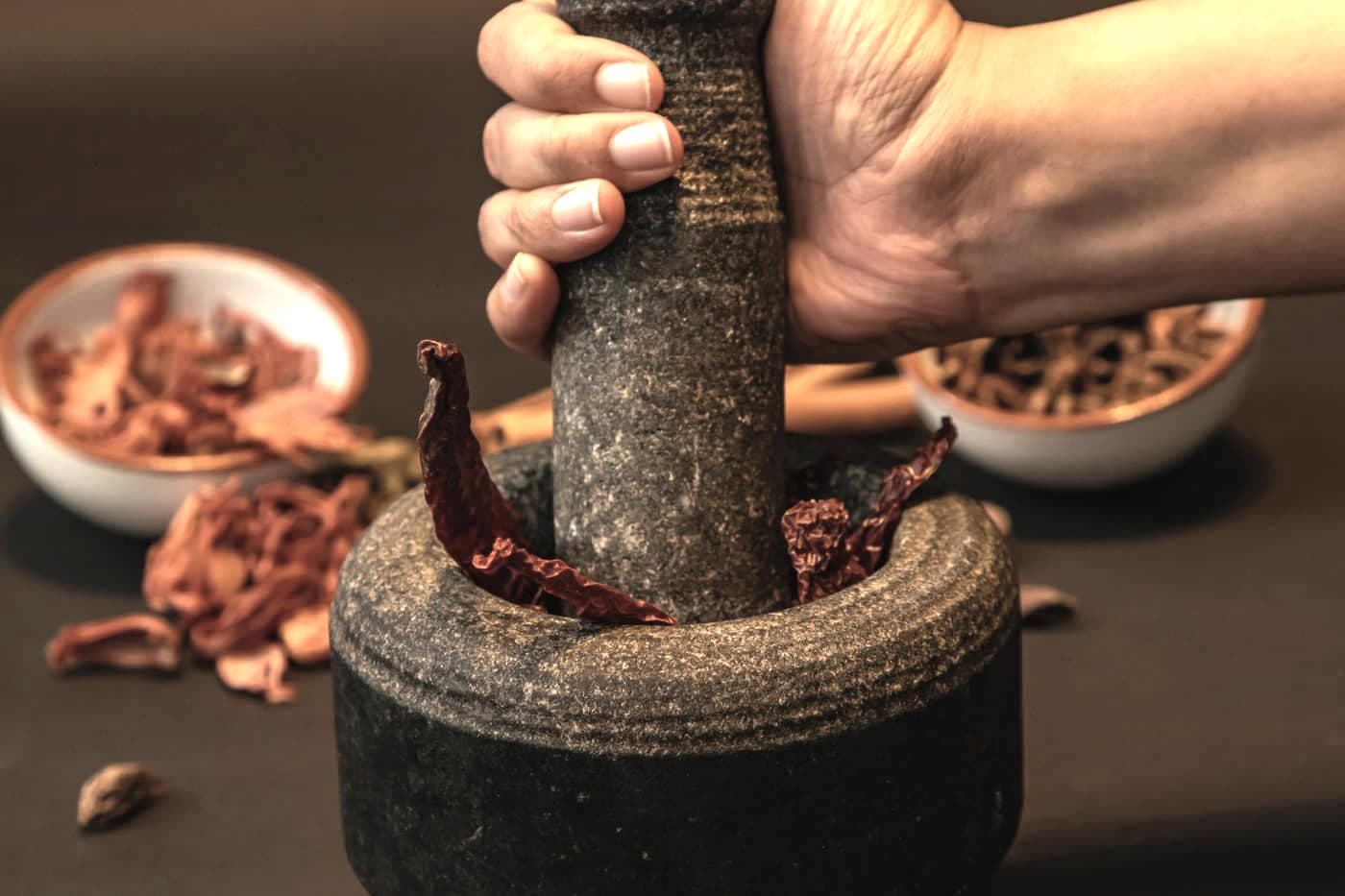
Whole spice, bought as whole spice. Kashmiri chilli from the valley's own growers; the rest from the growing regions that do each one best. Buying it whole is not sentiment — you can see what you are buying. Ground spice hides everything.
02
Cleaning
Sorted by hand before anything is switched on. Stones, stalks, damaged pods and the dull ones that would flatten a batch are taken out by people who have done it long enough to be quick about it.
03
Grinding
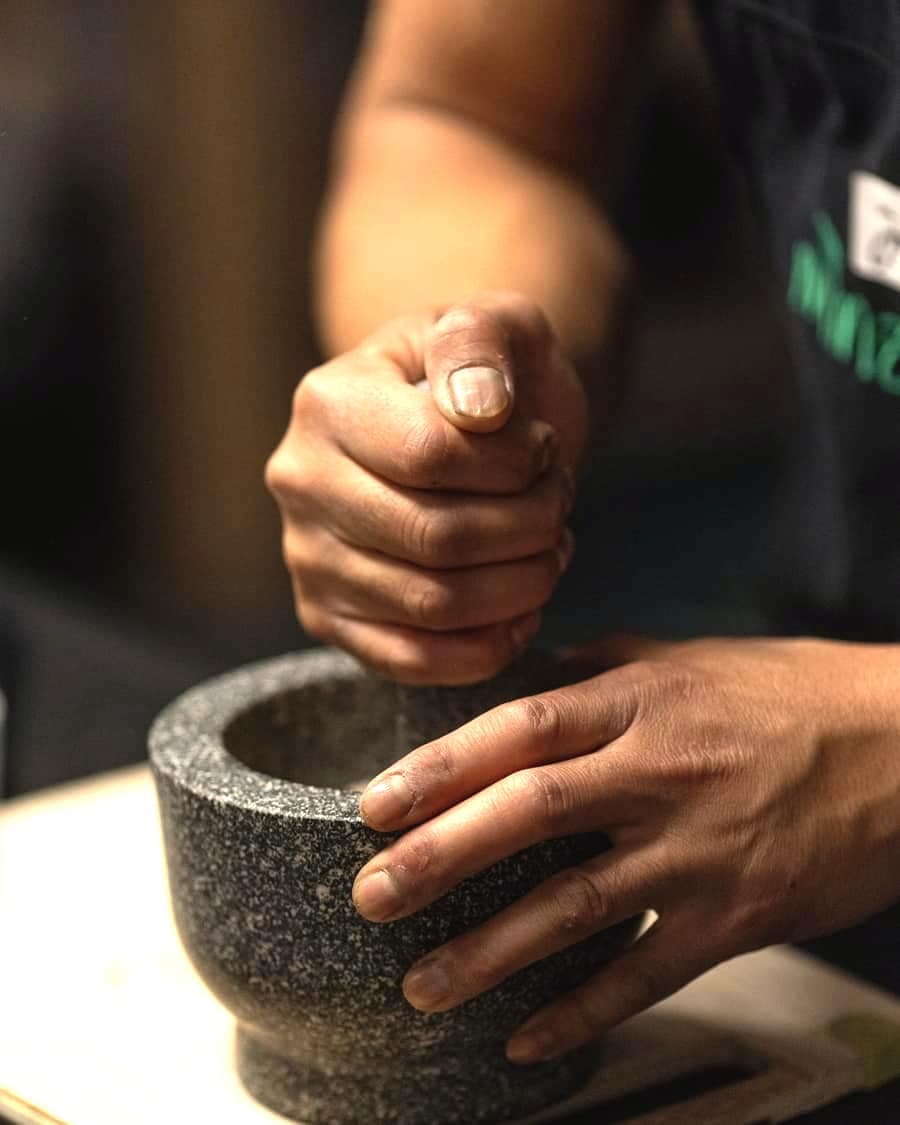
Small batches, the week they are packed. Ground cool and slow: heat is what burns the volatile oils off, and those oils are the aroma you paid for. Fast grinding is cheaper and you can smell the difference.
04
Sealing
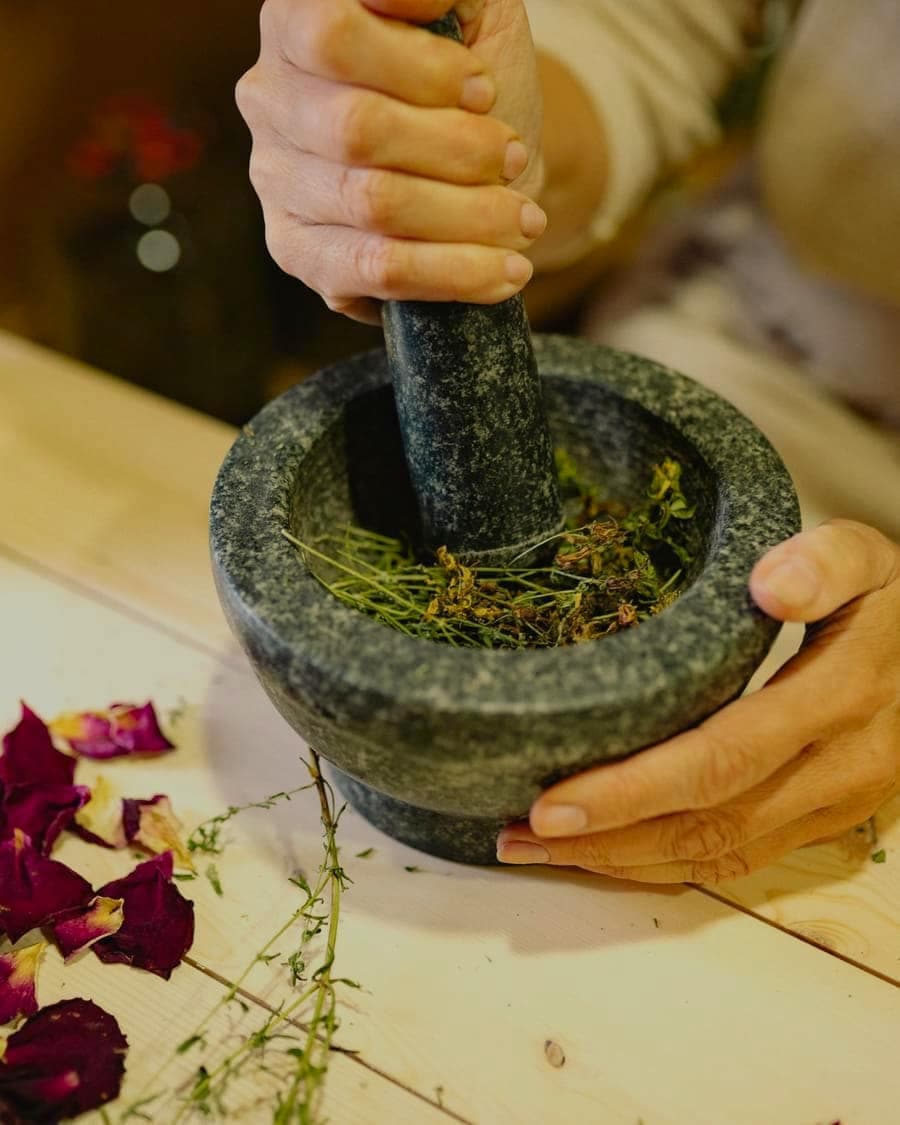
Vacuum sealed as soon as it is milled. Air and light are what take the colour and the smell; the seal is why a pack opened in Chennai still smells like the room it was ground in.
05
Dating
Batch number and packing date printed on the pack, not on a sticker that can be swapped. It is the one line on the packet that cannot be marketing.
Read the pack
The date is the part you can check.
Two numbers are printed on the back of every pack: a batch number and a packing date. The packing date is the week the spice was ground and sealed — not a date calculated backwards from an expiry.
It is there so you can hold us to it. If a pack on a shelf is old, the pack says so. We would rather that than a label that never ages.
Our spices are at their best within about six months of that date, and perfectly safe well past it. Aroma fades first; nothing becomes unsafe on a birthday.
Licensed, and named.
- Food business
- FSSAI Lic. No. 11019110000045
- Ground at
- Industrial Estate, Duderhama, Ganderbal, Jammu & Kashmir, 191201
- Office
- Chinar Chowk, Shalimar, Srinagar, Jammu & Kashmir
- Part of
- Murtaza Group of Companies
Everything above is on the pack as well. A licence you can only find on a website is not much of a licence.
Questions people actually ask.
- How do I read the batch and packing date?
- Both are printed on the back of the pack, near the seal. The packing date is the week the spice was ground and sealed — it is not a manufacturing date invented for the label. Use it as your guide: our spices are at their best within about six months of that date, and safe well beyond it.
- Why is your chilli powder less hot than the one I usually buy?
- Because it is Kashmiri chilli, and that is the point of it. Kashmiri chilli is grown for colour rather than heat: it gives a rogan josh its deep red without making it inedible. If you want heat as well, most Kashmiri cooks add a little of a hotter chilli alongside it.
- Do you add anything to the powder?
- No. No colour, no filler, no anti-caking agent, no preservative. Ground spice and nothing else, which is also why it clumps a little in a damp kitchen — that is the spice behaving normally.
- Is it FSSAI licensed?
- Yes. The licence number is printed on every pack and shown on this page. We are a licensed food business grinding at our own unit on the Industrial Estate at Duderhama, Ganderbal, with an office at Chinar Chowk, Shalimar, in Srinagar.
- How should I store it?
- In the sealed pack or an airtight jar, away from the stove and out of the sun. Heat and light take the colour and the aroma faster than time does. Do not keep spice above the hob, however convenient it is.
Now go and smell one.
Every pack in the range is ground and sealed the way this page describes.